Here’s a long, fact-based list of Jeff Bezos’s management philosophy and leadership principles drawn from Amazon’s official practices, his public statements, and third-party analysis of how he built and led Amazon. These are grounded in verifiable descriptions of Amazon’s culture and Bezos’s approach — not just inspirational wording. (Amazon.jobs)
✅ Core Management Philosophy Themes from Jeff Bezos
🟡 1. Customer Obsession
Leaders start with the customer and work backwards. Obsess over customers rather than competitors. (Amazon.jobs)
🟡 2. Long-Term Thinking
Bezos consistently emphasizes planning for the long term rather than short-term results — especially in strategic decisions like pricing and technology investment. (Business Insider Japan)
🟡 3. Visionary Leadership (“Day 1” Mentality)
“Day 1 culture”: never lose the startup mindset of urgency and customer focus no matter how big Amazon becomes. (note(ノート))
🟡 4. Invent and Simplify
Leaders at Amazon are expected to innovate and simplify processes, products, and services. (Wharton Magazine)
🟡 5. Ownership
Leaders act like owners, thinking beyond their teams and not sacrificing long-term value for short-term success. (Wharton Magazine)
🟡 6. High Hiring & Performance Standards
Bezos insisted on hiring and developing the best employees and raising recruitment standards over time. (CliffsNotes)
🟡 7. Are Right, A Lot
Leaders make sound judgments based on experience and data, even if it’s challenging or unconventional. (Wharton Magazine)
🟡 8. Bias for Action
Bezos encouraged fast decision-making — even with imperfect information — because speed matters in business. (agile-academy.com)
🟡 9. Frugality
Doing more with less; resource efficiency fosters innovation rather than hindering it. (agile-academy.com)
🟡 10. Dive Deep
Leaders operate at all levels, stay connected to the details, and audit frequently. (agile-academy.com)
🟡 11. Earn Trust
Leaders build trust through integrity and empathetic leadership. (Amazon.jobs)
🟡 12. Disagree and Commit
Team members can respectfully voice disagreement — but once a decision is made, they commit fully to its success. (Business Insider)
🟡 13. Deliver Results
Bezos’s philosophy stresses accountability and delivering high-quality results on time. (Louis Carter)
🟡 14. Learn and Be Curious
Continual learning and exploration are core to Bezos’s management approach — improving individuals and teams. (agile-academy.com)
🟡 15. Think Big
Bezos encouraged setting bold goals that push boundaries rather than settling for incremental improvements. (agile-academy.com)
🟡 16. Combined Risk-Taking & Operational Excellence
Bezos is known for pioneering new ideas (e.g., AWS, Prime) while building systems to scale and control operational quality. (LinkedIn)
✅ Additional Philosophical Elements Frequently Cited
📌 Customer Focus Over Competition
Bezos repeatedly said leaders shouldn’t just watch rivals — obsess over what maximizes customer value. (株式会社エモーションテック | 感情データの解析技術で最適な意思決定を。)
📌 Minimal Regret Decision-Making (“Regret Minimization Framework”)
When launching Amazon, Bezos used a mental model of minimizing future regrets to take big entrepreneurial risks (from early interviews). (ライフハッカー・ジャパン)
📌 Transformational & Visionary Style
His leadership blends visionary goals with a willingness to transform industries and embrace change. (steeringpoint.ie)
✅ How These Are Practically Applied at Amazon
Many of the principles above are formalized into Amazon’s Leadership Principles (initially 14, now often described as 16) — concrete behavioral expectations integrated into hiring, performance evaluations, and decision processes. (Amazon.jobs)
🔎 Summary Table (Management Focus vs. Operational Style)
| Category | Bezos Philosophy Focus |
|---|---|
| Customer Priority | Obsessed with delivering value first |
| Long-Term Strategy | Prioritizes future growth and sustainability |
| Culture & People | Develops leaders, insists on high standards |
| Innovation | Encourages invention, simplification, speed |
| Decision Making | Data, bias for action, disagree & commit |
| Operational Discipline | Frugality + diving deep into details |
I’ll frame each as ❌ What Bezos pushed against → ✅ What he preferred instead.
❌ 1. Customer Apathy
Taboo: Making decisions based on internal convenience, org politics, or competitors
Instead: Customer obsession
Bezos repeatedly warned that companies die when they become inward-focused.
Famous line: “Customers are always beautifully, wonderfully dissatisfied.”
❌ 2. Short-Term Profit Maximization
Taboo: Optimizing for quarterly earnings or Wall Street applause
Instead: Long-term free cash flow and durability
Amazon openly sacrificed profits for years.
Bezos said public companies often fail because they “manage earnings instead of building value.”
❌ 3. Bureaucracy & Process for Its Own Sake
Taboo: Rules, approvals, and committees that slow decisions
Instead: Small teams, ownership, speed
Two-pizza teams exist explicitly to fight bureaucracy.
Process is only justified if it improves customer outcomes.
❌ 4. “Professional Politeness” That Hides Truth
Taboo: Fake harmony, sugar-coating, consensus theater
Instead: Rigorous debate + “disagree and commit”
Bezos encouraged constructive confrontation.
Silence or passive agreement was considered dangerous.
❌ 5. PowerPoint-Driven Thinking
Taboo: Slide decks replacing clear thinking
Instead: Narrative memos
Bezos banned PowerPoint in senior meetings.
Leaders had to write 6-page narrative memos, read silently before discussion.
❌ 6. Risk Avoidance
Taboo: Playing it safe to avoid failure or embarrassment
Instead: High-velocity experimentation
-
Bezos distinguished between:
Type 1 decisions (irreversible, slow)
Type 2 decisions (reversible, fast — most decisions)
Fear of failure was considered a bigger risk than failure itself.
❌ 7. “That’s Not My Job” Thinking
Taboo: Narrow role boundaries
Instead: Ownership mentality
Leaders were expected to act like owners, not managers.
Problems were everyone’s responsibility if they affected customers.
❌ 8. Comfortable High Performers Who Stop Growing
Taboo: Static talent, even if previously successful
Instead: Continually raised performance bar
Bezos insisted hiring standards should rise every year.
Past success never guaranteed future safety.
❌ 9. Prestige, Status, and Executive Perks
Taboo: Corporate luxury and visible hierarchy
Instead: Frugality as a cultural weapon
Bezos used a cheap door desk as a symbol.
Execs flew economy for years.
Frugality was not about saving money — it was about resourcefulness.
❌ 10. Metrics Without Meaning
Taboo: Vanity metrics and dashboard theater
Instead: Input metrics tied to customer experience
Bezos emphasized leading indicators (inputs) over lagging indicators (outputs).
Example: shipping speed drivers vs. revenue numbers.
❌ 11. Slow Decision-Making Masquerading as “Being Careful”
Taboo: Over-analysis, endless reviews
Instead: Bias for action
Bezos said many decisions should be made with ~70% of the information.
Waiting for 90% certainty was often a mistake.
❌ 12. Copying Competitors
Taboo: Benchmark obsession
Instead: Inventing on behalf of customers
Bezos explicitly said competitors never define Amazon’s roadmap.
Copying was seen as reactive, not innovative.
❌ 13. “Day 2” Thinking
Taboo: Complacency, stasis, institutional decay
Instead: Day 1 mentality
Bezos defined Day 2 as:
Stasis
Irrelevance
Slow decline
Death
Avoiding Day 2 was a core cultural obsession.
❌ 14. Leaders Who Don’t Dive Deep
Taboo: High-level managers detached from details
Instead: Leaders who audit, question, and verify
Bezos was known to ask granular questions deep into operations.
“Trust but verify” was implicit.
❌ 15. Talent Preservation Over Customer Outcomes
Taboo: Keeping people because they’re likable or politically protected
Instead: Relentless focus on standards
Bezos believed culture is defined by who gets promoted, rewarded, or tolerated.
❌ 16. Fear of Being Misunderstood
Taboo: Avoiding bold moves because they look strange
Instead: Willingness to be misunderstood for long periods
One of Bezos’s most quoted principles.
AWS, Prime, and marketplace expansion all looked irrational at launch.
🧠 Meta-Taboo (The Most Important One)
❌ Comfort
Bezos treated comfort as the enemy of invention.
“If you’re not willing to be misunderstood, you can’t invent.”
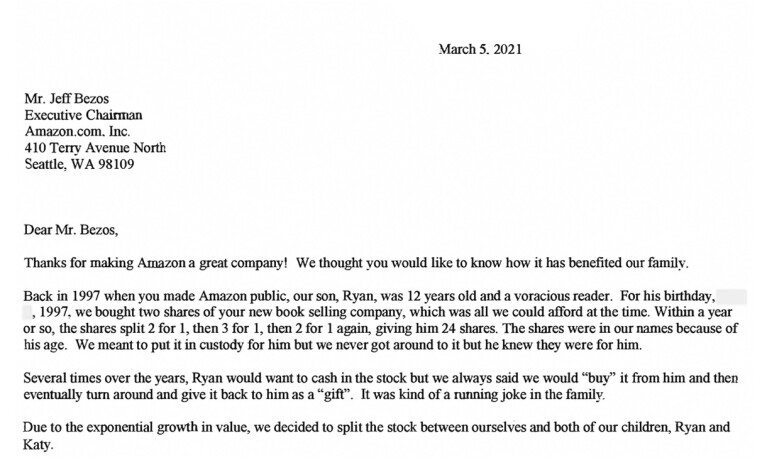
Below are the TOP 3 philosophies (phil) and TOP 3 anti-philosophies (anti-phil) of Jeff Bezos, selected strictly based on what he personally emphasized most often and most explicitly in:
Amazon 1997–2020 Shareholder Letters
Long-form interviews (Charlie Rose, 60 Minutes, Economic Club of Washington)
Management mechanisms he personally enforced at Amazon
Then I explain the logical reason each matters most.
TOP 3 PHILOSOPHIES (What Bezos Built Amazon Around)
1️⃣ Customer Obsession (MOST IMPORTANT)
Bezos evidence
Appears in every shareholder letter
“Start with the customer and work backwards”
Repeatedly says competitors should not define strategy
Logical reason
Customers are the only external constraint that cannot be negotiated.
Employees can be replaced
Investors can exit
Strategies can change
Customers leave
By anchoring decisions to customers, Amazon:
Automatically thinks long term
Avoids internal politics
Scales decision quality without central control
➡️ Logic: Customer obsession is a self-correcting system.
2️⃣ Long-Term Thinking
Bezos evidence
1997 letter explicitly warns investors Amazon will sacrifice short-term profit
Bezos said public companies fail by “managing earnings instead of building value”
Logical reason
Long-term thinking enables actions others structurally cannot take:
Sustained losses (Prime, AWS)
Heavy infrastructure investment
Patience before monetization
➡️ Logic: It creates strategic asymmetry — competitors literally cannot copy you without dying.
3️⃣ High-Velocity Decision-Making (Bias for Action)
Bezos evidence
Type 1 vs Type 2 decisions framework
Most decisions should be made with ~70% information
Logical reason
Speed increases learning rate.
More decisions → more experiments
More experiments → more data
More data → better judgment
➡️ Logic: Decision velocity compounds like interest.
TOP 3 ANTI-PHILOSOPHIES (What Bezos Actively Fought)
1️⃣ Short-Termism (MOST IMPORTANT ANTI-PHIL)
Bezos evidence
Open criticism of “quarterly capitalism”
Amazon tolerated minimal profit for ~20 years
Logical reason
Short-termism corrupts every other decision:
Kills experimentation
Discourages risk
Pushes optics over reality
➡️ Logic: Once quarterly results dominate, innovation becomes irrational.
2️⃣ Bureaucracy as a Substitute for Thinking
Bezos evidence
Two-pizza teams
PowerPoint banned in senior meetings
Bezos called bureaucracy the enemy of invention
Logical reason
Bureaucracy slows feedback loops.
Slow feedback = slow learning
Slow learning = loss of innovation
➡️ Logic: Scale creates bureaucracy automatically; innovation does not.
3️⃣ Risk Avoidance / Fear of Failure
Bezos evidence
“Failure and invention are inseparable twins”
Public acknowledgment of large Amazon failures
Logical reason
Avoiding failure guarantees mediocre outcomes.
Big wins require many attempts
Many attempts guarantee some failures
➡️ Logic: Punishing failure mathematically eliminates breakthroughs.
FINAL LOGICAL SYNTHESIS
Bezos’s system is not inspirational — it is mechanical.
| What he promotes | What he forbids |
|---|---|
| Customer obsession | Short-term profit obsession |
| Long-term thinking | Quarterly optimization |
| Fast decisions | Bureaucratic delay |
Core logic:
Maximize long-term learning speed while minimizing comfort, ego, and short-term approval.
Maximize long-term learning speed while minimizing comfort, ego, and short-term approval.
That’s why these 6 matter more than all others.